Loading
§ Vol. IX · Trail places
Trail places.
Seventeen landmarks east-to-west, in the order an emigrant would have reached them. Each has its own page covering full history, what survives today, and the people connected to it.
- IMile 0 · MissouriRead full entryDeparture window: Apr-May
Independence, MO
The most-used jumping-off point for both the Oregon and Santa Fe trails. Where most emigrant families bought their wagon, oxen, food, and tools before setting out.
- FKMile 320 · NebraskaRead full entryEstablished: 1848
Fort Kearny
The first Army post west of the Missouri and the convergence point for trails out of Independence, Westport, St. Joseph, and Council Bluffs. Where the trail truly became one road.
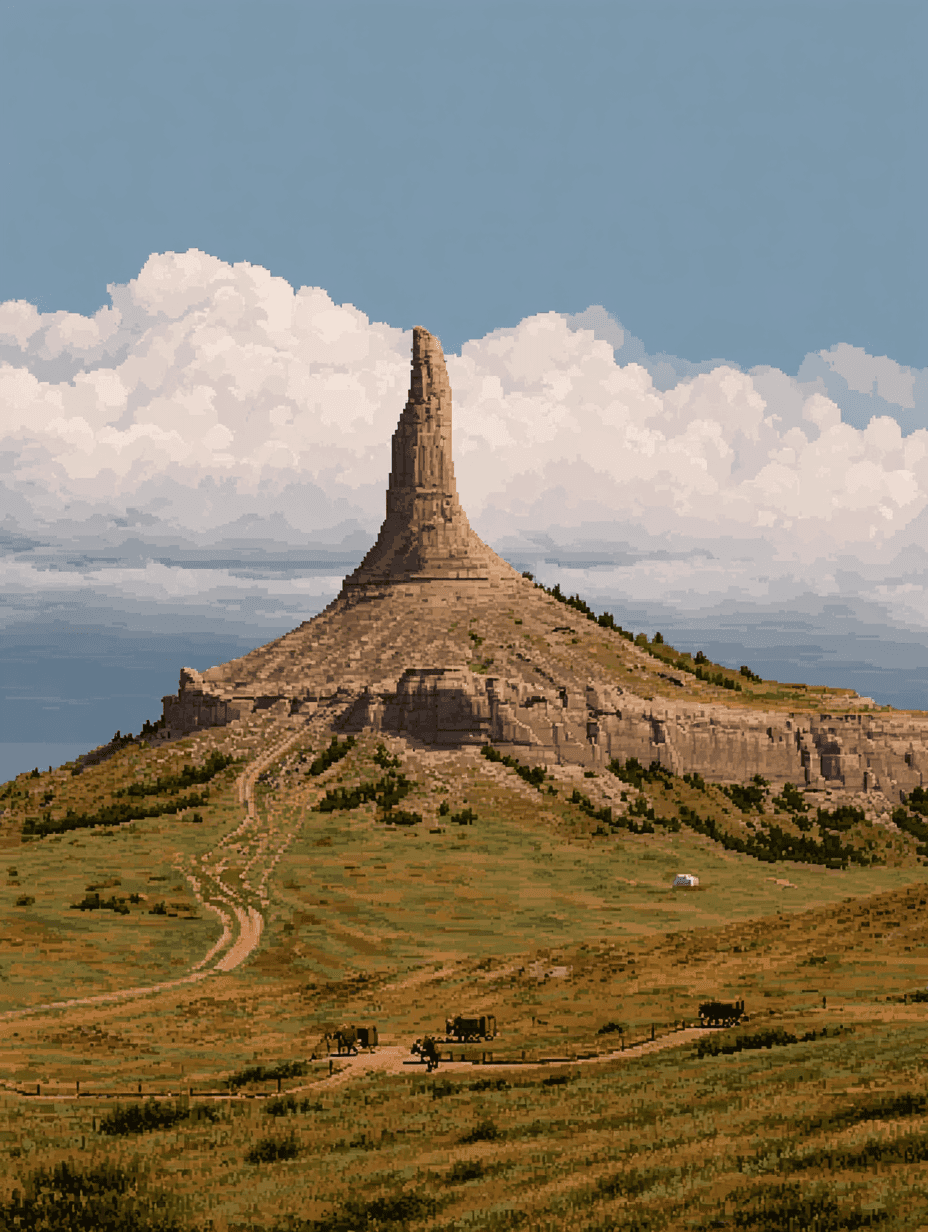 Mile 580 · NebraskaRead full entryHeight: ≈ 300 ft
Chimney Rock
The single most-mentioned landmark in surviving emigrant diaries. Its visibility from miles away made it the trail's psychological midpoint, proof you had left the prairie behind.
- SBMile 615 · NebraskaRead full entryHeight: 800 ft
Scotts Bluff
A massive bluff complex blocking the trail's natural route. The 1851 opening of Mitchell Pass through the bluffs cut a day off the journey for every train that followed.
- FLMile 650 · WyomingRead full entryEstablished: 1834
Fort Laramie
The trail's single most important resupply, communications, and decision point, and the site of the 1851 treaty that tried, and failed, to manage relations with the Plains nations.
- RCMile 685 · WyomingRead full entryInscriptions: Thousands
Register Cliff
The trail's most personal archive: a soft sandstone wall where thousands of emigrants carved their names, dates, and home towns as they passed.
- IRMile 830 · WyomingRead full entryGoal date: Jul 4
Independence Rock
The trail's calendar. Reaching it by Independence Day (July 4) meant you were on schedule to clear the mountains before the snows. Falling behind meant trouble.
- DGMile 835 · WyomingRead full entryDepth: 370 ft
Devil's Gate
A spectacular natural gorge five miles past Independence Rock, too narrow for wagons, but a sight every diary remarks on.
- SPMile 950 · WyomingRead full entryElevation: 7,412 ft
South Pass
The single feature that made the entire Oregon Trail possible, a wagon-passable crossing of the Rocky Mountains. Without South Pass there is no trail.
- FBMile 1,070 · WyomingRead full entryFounded by: Jim Bridger
Fort Bridger
The trail's great fork. From Fort Bridger, Oregon-bound trains continued north-west, California-bound trains turned south on the Hastings Cutoff, and Mormons turned south-west to the Salt Lake Valley.
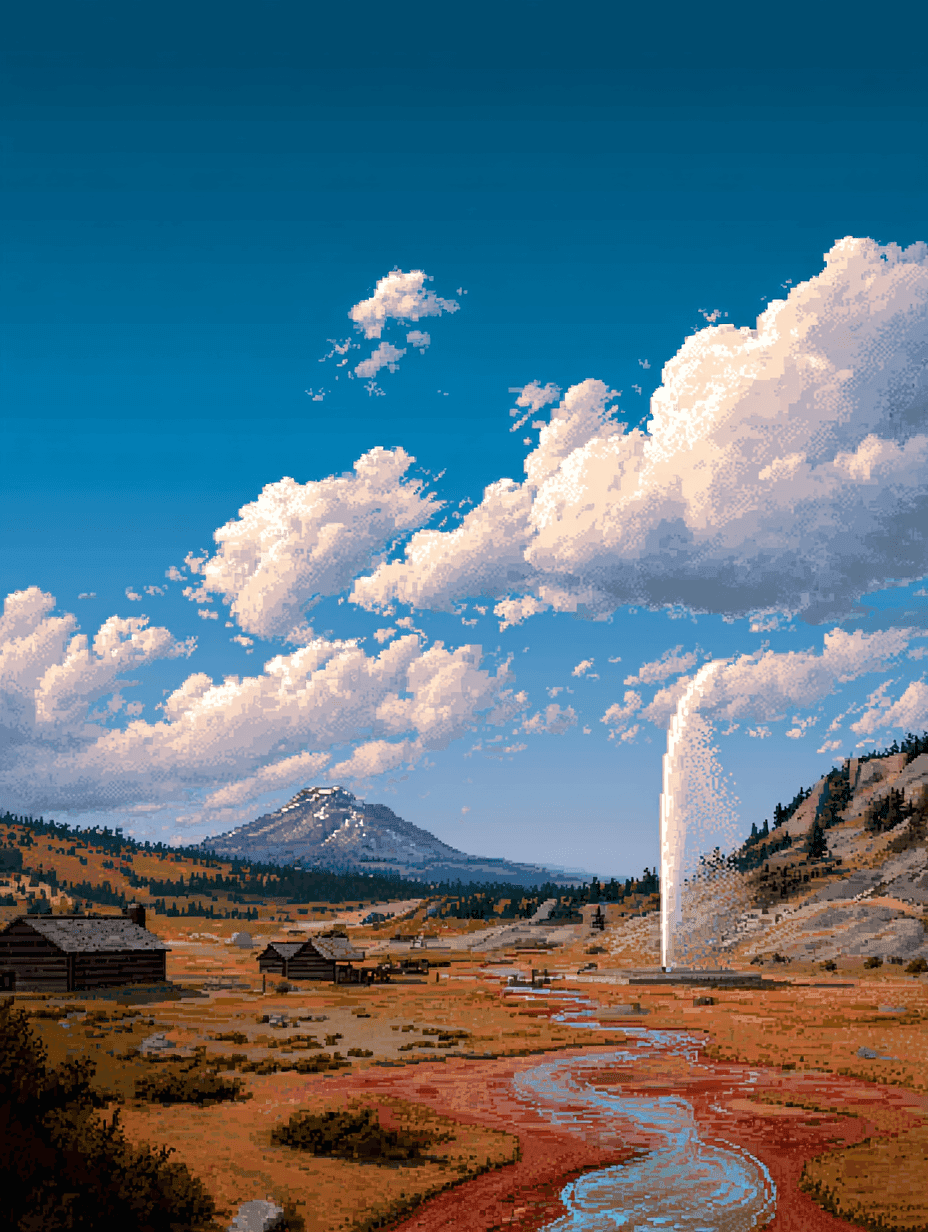 Mile 1,185 · IdahoRead full entryWater: Carbonated
Soda Springs
A naturally carbonated spring on the Bear River, and a junction where some California-bound trains left the Oregon route on Hudspeth's Cutoff.
- FHMile 1,290 · IdahoRead full entryFounded: 1834
Fort Hall
The last major resupply before the Snake-country deserts. Until 1843, HBC clerks here actively tried to talk Oregon-bound trains into abandoning their wagons.
- FBMile 1,530 · IdahoRead full entryTrail mile: 1,530
Fort Boise
The last fort before the Blue Mountains and the Columbia. Wagons were checked, oxen rested, and provisions topped up before the trail's final hard climb.
- FWMile 1,750 · WashingtonRead full entryOn river: Columbia
Fort Walla Walla
The trail's first contact with the Columbia River, and from 1836 onward the gateway to the Whitman Mission, with consequences that reshaped U.S. policy in the Northwest.
- TDMile 1,900 · OregonRead full entryUntil 1846: Raft Columbia
The Dalles
The trail's deadliest stretch before 1846. Wagons had to be dismantled and rafted down the Columbia past Mount Hood. The Barlow Road of 1846 ended that grim chapter.
- OCMile 2,170 · OregonRead full entryLand grant: 320 ac
Oregon City, OR
The trail's official end: the federal land office where every Oregon-bound emigrant filed their claim. Where the journey stopped being a journey and became a life.
- FVMile 2,200 · WashingtonRead full entryHBC HQ: 1825-1846
Fort Vancouver
The Hudson's Bay Company's western capital, and, under chief factor John McLoughlin, the place that fed and clothed countless exhausted emigrant families through their first Oregon winter.