A series, not a single game
The Oregon Trail began life in 1971 as a text-only BASIC program written by three Minnesota student teachers — Don Rawitsch, Bill Heinemann, and Paul Dillenberger — for an eighth-grade history class on an HP 2100 minicomputer. Picked up by the Minnesota Educational Computing Consortium (MECC) in 1974 and pushed onto the state-wide school time-sharing network in 1975, it became one of the most popular programs in Minnesota classrooms within a year.
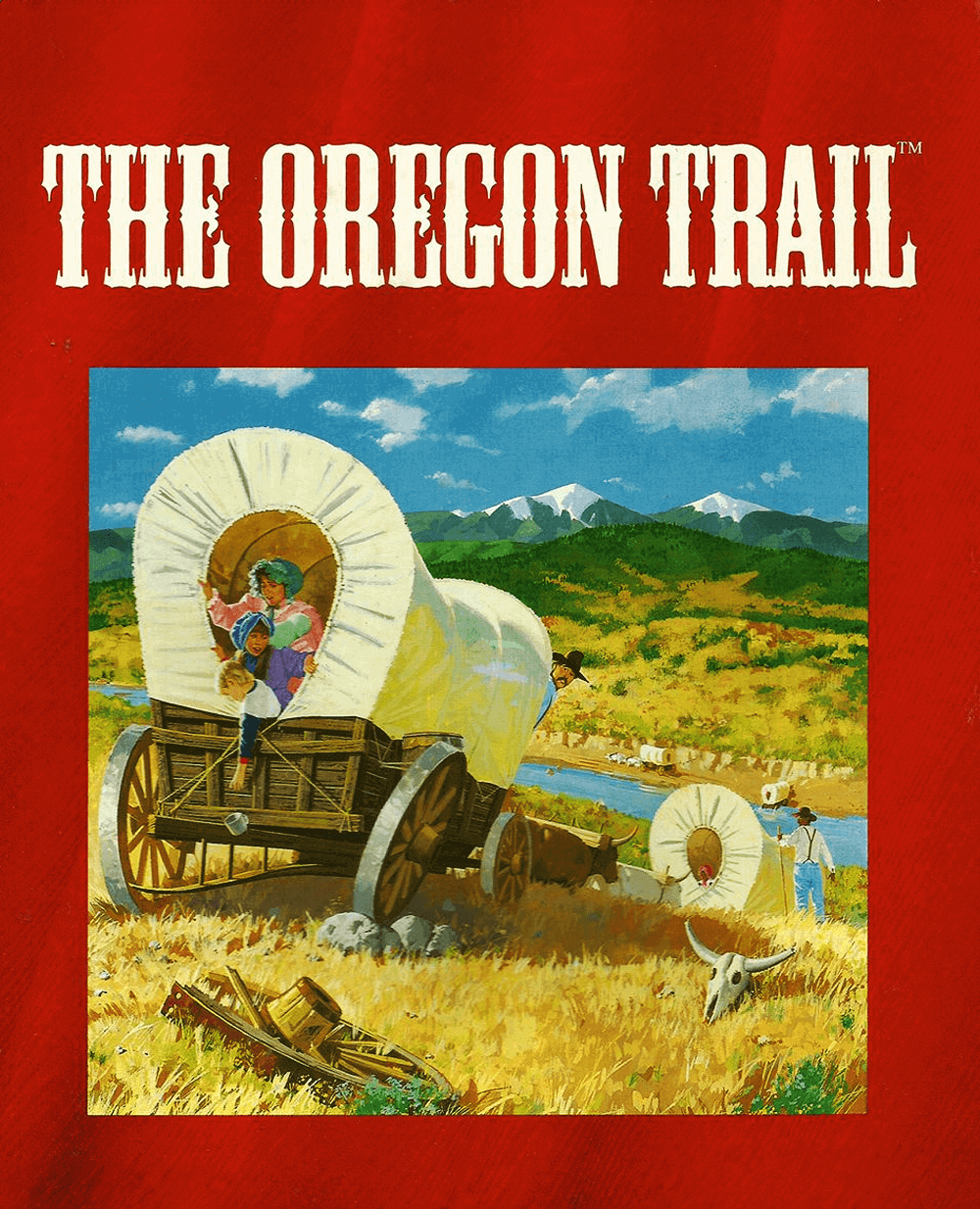
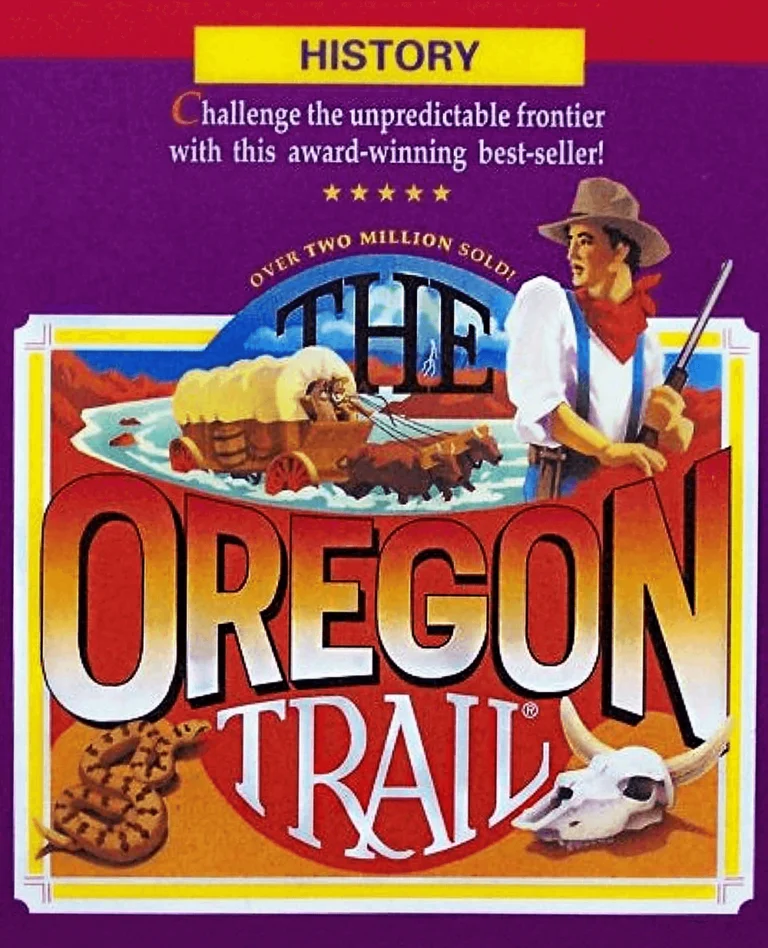
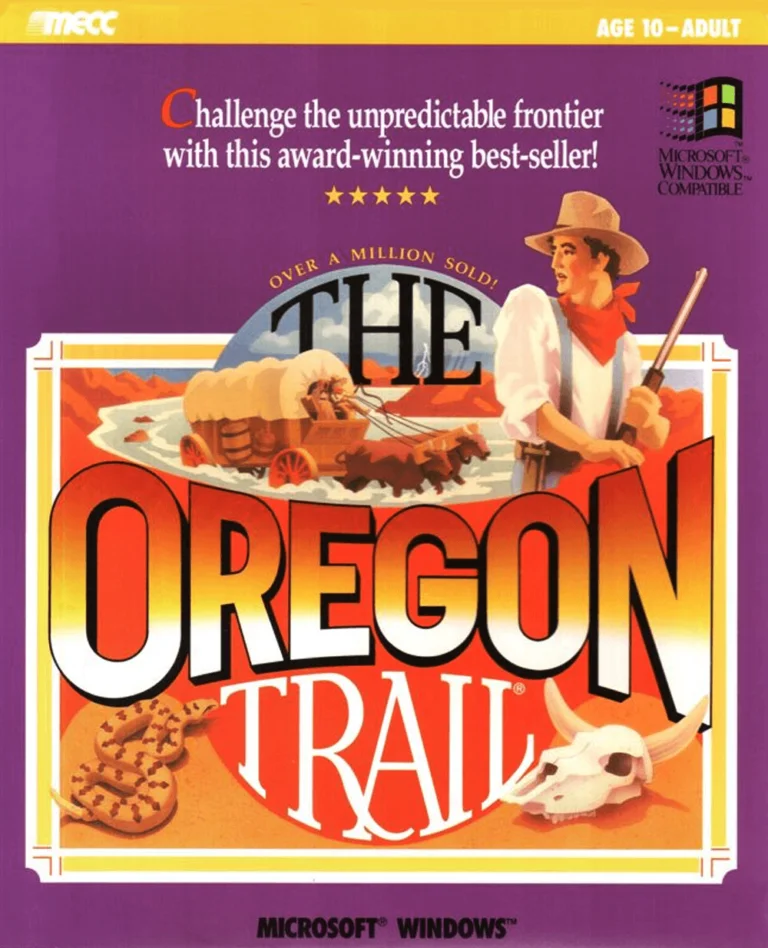
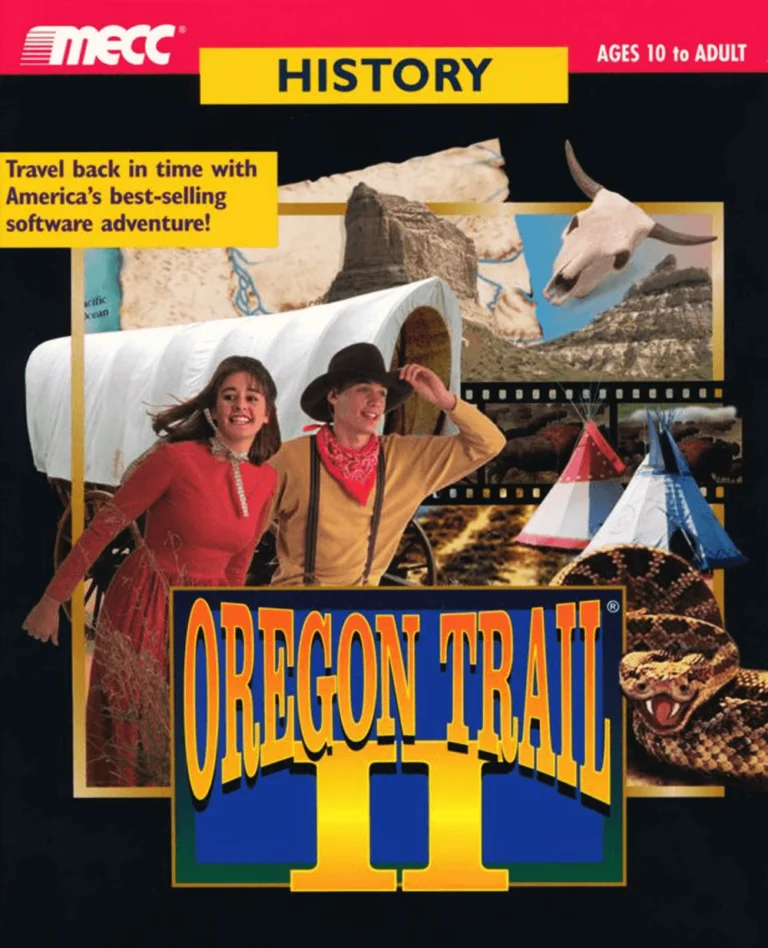
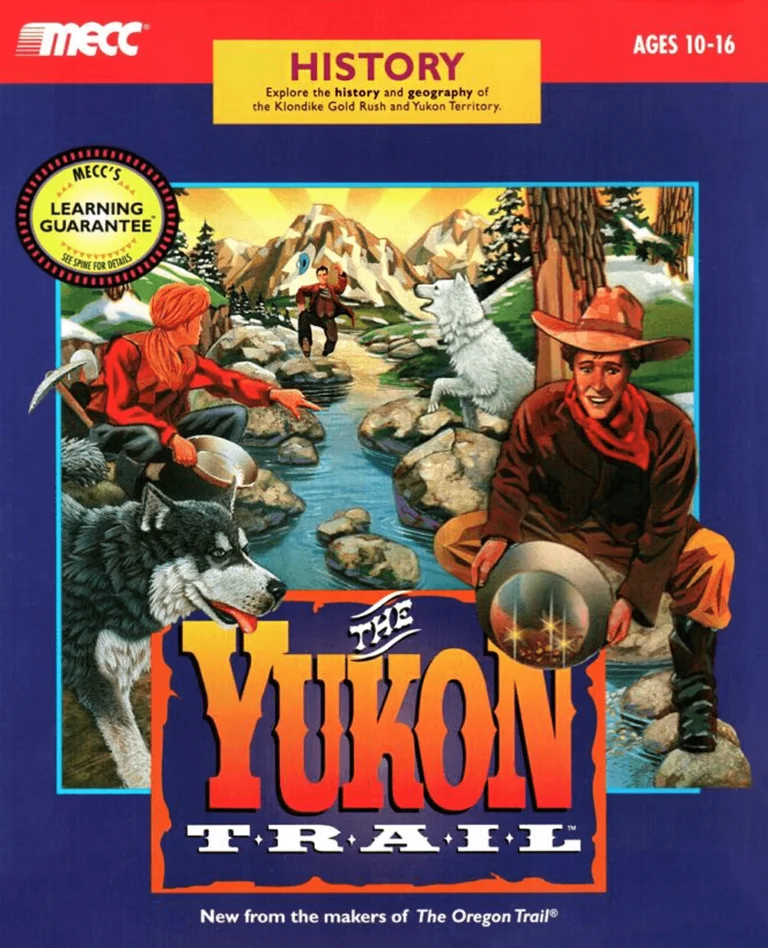
The version you remember from a school computer lab is almost certainly the 1985 Apple II graphical edition, designed by R. Philip Bouchard, or one of the DOS releases that followed: the 1988 MS-DOS port, the 1990 update, or the 256-colour VGA Deluxe in 1992. From there the family kept growing: a Windows 3.x port (1993), the ground-up sequel Oregon Trail II (1995), a multi-OS CD-ROM v1.2 re-release (1996), the Pioneer Adventures-flavoured 3rd Edition (1997), the isometric-3D 4th Edition (1999), and the Montgomery-family-flavoured 5th Edition (2001). Spinoffs sent the same engine philosophy to the Klondike, the Amazon, and a north-to-south crossing of Africa by bicycle.
Across all of those editions, the franchise has sold more than 65 million copies — an essentially unmatched figure in educational gaming — and was inducted into the World Video Game Hall of Fame in 2016, the same year Time magazine ranked it #9 on its list of the 50 best video games of all time. For a deeper look at how it all started, see our short history of The Oregon Trail game.